Wednesday, May 16, 2012
Gender
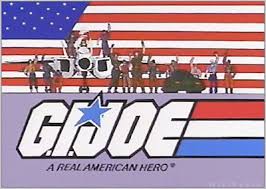
Men have always been portrayed as being tough, masculine and in charge. Heaven forbid anything less. In tough guise, men are described as the dominant culture. Crimes committed by men, like murder are not as shocking as a woman killing a man. The gender overview is that a man is bigger and stronger than women. Dolls with men portrayed as being large frame and woman who were larger in the 50’s and 60’s, but today are expected to be smaller due to their status and being reduced by the masculine, larger strong man.
Men like Howard Stern who degrade woman and makes light of truly violent situations Gender inequality freely encouraged by an influential media figure who is embraced by some as being the “norm.”
Homosexuals being degraded for not meeting the “man box.”
In Understanding Sexual Orientation, it says that “every individual is innately-inherently-either heterosexual or homosexual.” It also says that “from the time of birth one is fated to be one or the other.” That gay and lesbians are recognized by their personality traits. Chapter nine tells us gender is adapted. I agree. Instead of fostering what is natural, we encourage boys to be tough and girls to be dainty and even fragile. It saddens me to think that a boy or a girl who doesn’t meet the “norm” is stigmatized and reduced. Constant debates in our country over gay marriage, a woman’s right to choose and now who will be our next president. Notice two issues are really gender related. Gender being assigned by our political leaders and the people in our country who are so determined to make these people what they consider to be normal. If we know gender is adopted, then why all the expectations. Sexuality and gender are two different things yet related by society as what is the norm in the same sense. Can a gay man love football or a lesbian have long hair and wear make up?
I believe we should be our natural self. Homosexual, heterosexual, boy, girl, blue, pink. Even if you don’t believe in God you must know we were somehow created to be ourselves. Whoever that may be should be our own decision.
I have truly enjoyed this class and have learned there is more to the individual, gender, class, race, culture and history than I could have imagined. I loved all the lectures from our great professor and all the perspectives of my colleagues. While I am in my pursuit of a career in Social Justice, I hope to take all these things into consideration as I look at every human being I come across in my path. Stay true to yourself and allow for knowledge. Its through our experiences we truly come to understand our lives and all that surrounds us.
Peace and Love until we meet again……..

Wednesday, May 2, 2012
Segregation
Segregation 's existence in our own neighborhoods because of societies idea on what class a neighborhood should be.
I grew up in a lower class neighborhood that to this day is segregated. Separated by a park, the back and the projects are like two different neighborhoods. The back consists of low or working class people where the projects consist of low or working class people. What makes us different? Well, today its the yuppies who moved here to be close to the city and then you have the projects whose majority consists of African American and Hispanic population. When I was growing up I was bused to school because my parish school closed and we went to a clustering parish school along with other kids from the Hook including kids from the projects. We seemed to conform because the kids from the school didn't want us there and treated us all like out caste whether we were black or white. Eventually, we all mingled together and I made some lasting friendships even to this day. My best friends were Irish, Italian and African American. My friend who lived in the projects would have us over while her mother worked and I remember loving how she had the privacy of her own room. My apartment was railroad and I shared a one bedroom with two of my sisters while my older sister lived downstairs and my brother with my parents on the top floor. To me we were crowed and to my friends, we had a lot of space. The neighborhood back then was a mix of whites, blacks and hispanics.
Reading Fences and Neighborhoods:Segregation on 21st Century America takes me back to those days. I guess I forgot how segregated our neighborhoods are. To think of the disadvantages people have because of race/ethnicity is just sad. To work so hard to achieve a goal such as buying a home and be limited to where you can or would want to live because of societies categories just breaks my heart. I recently went to a friends house in the projects for a memorial for his wife who passed away. I was with my priest and as we entered the building a Hispanic woman approached us and told us to be careful that we would be robbed. I laughed and told her I grew up in this neighborhood and she laughed as well.
My parents took pride in our neighborhood for its variety. My dad's friend Ms.Barbara sending us the best fried chicken on Sunday's was something I will always remember. My neighborhood has changed and it seems more white folks are moving in but I notice the integration that seems to be working well and pray for unity and equality that will allow for everyone to own a home or even rent wherever they want and feel welcome and comfortable in what they are paying for.
I grew up in a lower class neighborhood that to this day is segregated. Separated by a park, the back and the projects are like two different neighborhoods. The back consists of low or working class people where the projects consist of low or working class people. What makes us different? Well, today its the yuppies who moved here to be close to the city and then you have the projects whose majority consists of African American and Hispanic population. When I was growing up I was bused to school because my parish school closed and we went to a clustering parish school along with other kids from the Hook including kids from the projects. We seemed to conform because the kids from the school didn't want us there and treated us all like out caste whether we were black or white. Eventually, we all mingled together and I made some lasting friendships even to this day. My best friends were Irish, Italian and African American. My friend who lived in the projects would have us over while her mother worked and I remember loving how she had the privacy of her own room. My apartment was railroad and I shared a one bedroom with two of my sisters while my older sister lived downstairs and my brother with my parents on the top floor. To me we were crowed and to my friends, we had a lot of space. The neighborhood back then was a mix of whites, blacks and hispanics.
Reading Fences and Neighborhoods:Segregation on 21st Century America takes me back to those days. I guess I forgot how segregated our neighborhoods are. To think of the disadvantages people have because of race/ethnicity is just sad. To work so hard to achieve a goal such as buying a home and be limited to where you can or would want to live because of societies categories just breaks my heart. I recently went to a friends house in the projects for a memorial for his wife who passed away. I was with my priest and as we entered the building a Hispanic woman approached us and told us to be careful that we would be robbed. I laughed and told her I grew up in this neighborhood and she laughed as well.
My parents took pride in our neighborhood for its variety. My dad's friend Ms.Barbara sending us the best fried chicken on Sunday's was something I will always remember. My neighborhood has changed and it seems more white folks are moving in but I notice the integration that seems to be working well and pray for unity and equality that will allow for everyone to own a home or even rent wherever they want and feel welcome and comfortable in what they are paying for.
Monday, April 30, 2012
Race
Race Matters talks about the social injustice that occurred back in Los Angeles, 1992. The Rodney King beating and the riots that followed. Social Injustice seen first hand on video yet was justice really served? Can dignity be replaced? Can a man who was violated feel worthy or secure in his own skin? I’m not really sure. I think trauma will always take its toll and the human who was traumatized will soon be haunted.
The article talks about xenophobia, which is a fear of foreigners. What cracks me up in America is that we are all some sort of foreigner. Race is what? A color? Ethnicity? A Culture, an adoption of beliefs and rituals.
Race is an issue that we can all relate to. Chapter 8 tells us that “Race is also one the bases on which our society perceives, rewards, and punishes.” Once again society classifying human beings. Rewards? Punishments? What does that mean? Well, it means imbalance. Inequality. Chapter 8 also tells us “Race is a concept, not a scientific one”
The article Race Matters quotes W.E.B. Du Bois when he wrote:
“They approach me in a half-hesitant sort
of way, eye me curiously or compassionately, and then instead of saying directly,
How does it feel to be a problem? they
say, I know an excellent colored man in
my town.… Do not these Southern outrages make your blood boil? At these I
smile, or am interested, or reduce the boiling to a simmer, as the occasion may
require. To the real question, How does it
feel to be a problem? I answer seldom a word.”
A problem. What kind of problem? Was he a problem for being his natural self?
I remember many years ago I was hired as a Nanny to a little Italian girl. Her parents were from Rome and wanted their daughter to be taken care of by an Italian. I worked for them for a while before the mother asked me if I spoke Italian. I didn’t, so I told her my father who was a first generation Sicilian to America, never taught me or my siblings the language. My mother was Neapolitan and didn’t speak the language either. The mother of the little girl had the nerve to tell me Sicilians were looked down upon in Italy, and soon after told me she didn’t need me to take care of her daughter anymore. The problem was I didn’t meet her Roman standards. I was classed within my own so called ethnic group. I was so insulted. Raised to be proud, I was looked down upon by someone who felt my class was too low for her higher and whiter class. Was I being punished for not meeting her standards? That was my first realization to what it means to be different. My dad was very upset by the treatment. I was told to be proud and move on. Of course I did, but it stayed that stayed with me for a long time. After reading Du Bois quote, I can see what he means.
Monday, April 23, 2012
Social Stratification
At some point in our life we all think about class. Whether it’s our own or someone else’s. We can’t help but to separate people by external things. These things include money, prestige, status and so on. What we have, and the powers we hold are what put us into a class.
Watching “People Like Us,” was very enlightening to me. I always knew their where social classes, but seeing first hand how people of all different classes view themselves and others is quite disturbing. In the beginning, when people were categorizing people in a social class just by watching them walk down the street seems so degrading. To realize even the loaf of bread we buy says something about what class we are, in is something I don’t think about. I do think of it as being over priced when I pay $4.00 for whole grain, but I think good health is not something that should be compromised, nor should we have to go broke to be healthy. This video was interesting when gadgets for cooking were considered to be something only a person of a higher class would know about. Wine and other leisure’s show our socioeconomic status. People who don’t even know how to read the foreign labels but purchase the products just because they can. The poor mom busting her butt at Burger King and not even respected by her own children, well that was just sad…
Their was an article in the Daily News about the debate between lower class families not having access to produce which contributes obesity. They are saying there is no excuse for the people in West Harlem to be overweight when they have a Fairway market with low priced produce and a free shuttle bus to transport consumers. So I guess now these people will be classed as being obese and lazy because they have access to the low priced produce. In reality, what is low priced produce? I find the price of produce outrageous. I have a job and find eating healthy very expensive.
I guess this is where a class systems comes into play. Ranked according to their economic position. Either you can afford the bread or not.
Watching “People Like Us,” was very enlightening to me. I always knew their where social classes, but seeing first hand how people of all different classes view themselves and others is quite disturbing. In the beginning, when people were categorizing people in a social class just by watching them walk down the street seems so degrading. To realize even the loaf of bread we buy says something about what class we are, in is something I don’t think about. I do think of it as being over priced when I pay $4.00 for whole grain, but I think good health is not something that should be compromised, nor should we have to go broke to be healthy. This video was interesting when gadgets for cooking were considered to be something only a person of a higher class would know about. Wine and other leisure’s show our socioeconomic status. People who don’t even know how to read the foreign labels but purchase the products just because they can. The poor mom busting her butt at Burger King and not even respected by her own children, well that was just sad…
Their was an article in the Daily News about the debate between lower class families not having access to produce which contributes obesity. They are saying there is no excuse for the people in West Harlem to be overweight when they have a Fairway market with low priced produce and a free shuttle bus to transport consumers. So I guess now these people will be classed as being obese and lazy because they have access to the low priced produce. In reality, what is low priced produce? I find the price of produce outrageous. I have a job and find eating healthy very expensive.
I guess this is where a class systems comes into play. Ranked according to their economic position. Either you can afford the bread or not.
Monday, April 16, 2012
Worthy or Not?
To be poor is something I think most people fear. Constant worry of how the bills will be paid. Will the kids have enough to eat or am I going get fired? But what does it really mean to be poor? What does it mean to be deserving?
After reading “ Positive Functions of the Undeserving Poor: Uses of the Underclass in America,” it made me wonder why people with less money are stigmatized. Why are they accused of crimes and all the wrong doings? I was really interested to read that people receiving supplemental help are actually monitored for who they live with. How a person who is so called a “deserving person,” can have a live in partner but an “undeserving poor person” is not allowed. Who is a poor person to have feeling for another human being when they can’t afford to, right? It is plain to see from this article that the plan is designed that way. Who can the upper class blame for the crimes committed. Or any other wrong doings for that matter. Don’t we need a scapegoat?
Poverty is an ongoing issue in our country. We take the time to bail out Wall St. (cause they must have been deserving) but no one cares for the mother living in a one bedroom with 4 or five kids. Its her own fault. No one cares that her husband is on the street with a drug habit he got when he was making it big selling drugs to take care of his family. What about the elderly woman who has no family and can’t afford her prescriptions, who’s going to take care of her. But I guess it must be her own fault she’s old and sick. Just because her husband fought in a war, who is she to be deserving of her much needed medication. Why should she spend her last days in comfort. Of course I say this all with sarcasm to show examples of situations and the outlook of the deserving. I for one as a single mom had my own share of judgments and misfortunes. It takes a lot to overcome society and their judgments but like the article says, poverty needs to be looked at and changed before any of the stigmas will be removed.
The list goes on and on of moral wrong doings in our country and yet we continue to stigmatize and never consider the real issues surrounding them. Does society like these classes. Do they feel better knowing someone is worse off then they are? Maybe. I guess we have to wait it out and hope for the change that is so much needed.
Tuesday, April 3, 2012
Deviance
I was having hard time thinking about what I can write on deviance. What do I know about deviance? I think I’m an upstanding law abiding citizen. What boundaries do I cross, what do I do that I’m not even aware of. Am I guilty by association? In reality, I’m sure I am guilty on some level.
Chapter 6 has opened my eyes to some of my behaviors. In terms of Folkways, I think we all get away with a lot. Crossing over to the other side of the street not to say hello or even not answering the phone when my caller ID tells me its someone I don’t feel like talking to. Yes, I get away with it and it’s not really a crime. But is it wrong or just rude? Mores, well, I think I usually draw the line on Mores. I wouldn’t consciously break the law or even behave in an immoral way. I wouldn’t violate a person or intentionally do anything harmful to anyone. Taboo, well I’m sure I’ve done some forbidding things, but I can say I know what the boundaries are. According to Freud, incest is taboo and to that I most definitely agree. I think some people are just risk takers. They know they shouldn’t, but do. Deviants? Maybe, maybe not. I guess it depends on the situation and circumstances.
Stigmas on the other hand, well, they speak for themselves. According to Erving Goffman, the term stigma is used as an attribute that changes you from a whole and usual person to a tainted and discounted one. There are things people do to normalize things to try and make them more normal. Woman fight for rights and so on. Our race can be a factor when it comes to stigma. Recently, I was sitting in the doctor’s office; I couldn’t help but over hear an elderly woman talk about actor, Tyler Perry. She was saying how he was stopped somewhere in Georgia by a white cop who didn’t know who the actor was until a black officer came to the scene. “Didn’t he know that Tyler Perry could buy and sell him out? Now he knows who he is,” she was saying. I listened and smiled at this woman’s pride. I admit, I wondered if Tyler had been speeding, but what this woman saw was a white cop pulling over a black men. She went on to say " if he didn’t have money, he’d go to jail.” Is she right? In my opinion, yes, she sure is. Was Tyler Perry stigmatized because of his skin color? Or was he breaking law and knew he could pay his way out of the situation? I guess there are two sides to the story, but I found it interesting of how this woman was ready to defend a man she didn’t even know because she saw this as an injustice because of race. I am sure she has seen a lot of racial injustice in her time. Inequalities that have shaped this woman’s beliefs. We ended up chatting and turns out she was a past parishioner at my church. I told her my mother grew up the projects and she seemed surprised but was pleasant and as turned it out, we knew some of the same people.
After reading “Race and Class in the American Criminal Justice System,” I empathize with all groups who are no treated with equality. Once again society and status making the decisions for everyone. Trust is lost in over government’s legitimacy and certainly among groups in our society leading to crime and endless suffering that doesn’t seem to change because of societies views in certain situations. Change the can’t be made because of stigma and even taboo. The human is over looked and the individual needs are not met. Until then we will remain in the place we are. For some neutral and for some narrow minded. And that’s just the way it is.
Monday, March 26, 2012
How we are Socialized
Killing us Softly by Jean Kilbourne, shows how ads are used to sell items such as jeans. These ads really have nothing to do with the items being sold; they are used mostly to exploit women. These ads tell society that women are objects and not human beings. It portraits women as sexual objects. Ads of women with their mouth covered or eyes looking down, indicating that women are not equal but below social standards and have no voice. Ads of women being physically harmed and violated. These ads shape society’s view on “norms” and how women should be viewed. The true nature of the woman is lost when her body is technically selling something. A body that is being shaped by society, saying to exploit and sell it. This is a norm here in the United States and the Western World. Commercials, magazines and even newspapers telling women “this is what you should look like and how you should behave.”
Sadly, when looking at a jeans ad, a woman might feel she wouldn’t look as good as the model and feel bad about herself. Even worse, a woman might just attempt to look that good by starving herself. The ad in the video of the woman with the watch worn on her upper arm is just frightening. It is safe to say that these ads play a tremendous role on how women view their bodies. It also shows how dangerous this can be for an insecure woman who has a poor view of herself. Instead of a woman being made to feel confident in her own skin, she is influenced by false and airbrushed photos. This is what she has to compete with. These examples show how Media influence society.
A Call to Men: Tony Porter talked about emotions and how men are not supposed to show them. Men are not supposed to behave like a girl. They are supposed to be strong and brave. When he talked about his daughter crying and the comfort he offered, he was being good dad. When his son cried, he was stern and told the 5 year to be a man. This is an example of the “norm” in men. Another example of the norm is when he was asked to take advantage of that girl who couldn’t defend herself from being sexually violated. Although he didn’t commit the act, he didn’t stop it either. Going along and even though remorseful, going with the norm of what a man is suppose to do.
I was saddened by the grief his father couldn’t share with his family, especially with his wife over the death of his son. Not to be consoled and to suffer in silence is just not healthy. Not showing emotion dehumanizes men. It is human to cry and emotions are part of our very being. An expression of ourselves. The self that changes and yet stays the same. The self that wants to cry and yet remains quite out of fear and shame of what society might think.
According to Chapter Five in Sociology Now, Gender Socialization tells us that boys and girls are expected to learn the norms differently. Boys are expected to be tough and girls sensitive and even passive. How unfair. I remember my daughter wanting to play softball and my mom thinking something was wrong with that. She said I should send her to dancing school, I didn‘t. She played ball and loved it. Was I wrong in allowing her to play? Was I making “A Tomboy” out of her? Chapter five states that’s what society would say. Wasn’t it her natural self I was nurturing? Or was I going against nature and encouraging her to so something wrong? I didn’t think so then and I really don’t think so all these years later.
Should we be categorized ? Should we be evaluated by how much we know by a certain age like Piaget suggests, or do we look at the individual who can contribute to society in a positive way at their own pace and comfort level. I don’t think society will change their minds and I don’t think we being human have much say in it. In the end most people will go with the flow. As we know, Society plays a huge role in who we are. How we are nurtured and what comes natural doesn’t mean we are right in what we do. It’s just what we know and learned from others. Chapter Five in Sociology Now tells us, Socialization is the process by which we become aware of ourselves as part of a group. It shapes our being and changes our views. Who our true self is and who we become. Like the woman in those ads and Tony Porter who were shaped by society. We all rely on society in order to survive. We rely on our parents when we are born and as we grow we depend and those in society for all of our needs. What to wear, what to eat and most importantly, what we believe. We look to our peers ,colleagues, church and government who play a role in shaping us. But is this positive? Isn’t it our natural right to decide for ourselves what the norm is? Why then are we so dependent on this whole called Society. Why is it that we can’t survive unless we are part of this group? John Locke believed we are born with a clean slate and Jean Jacque Rousseau believed we are born good, but are corrupted by society. These men believed we have Human Rights. Rights we are born with. No one has a divine right we are all human. It is true that our Founding Fathers modeled these beliefs when shaping our government. How then do we continue to be so dependent on society and their norms? I’m not sure, but I do know it is something that should be questioned and also challenged.
.

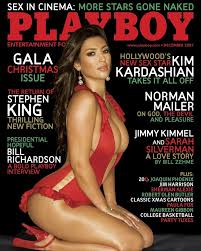
Sadly, when looking at a jeans ad, a woman might feel she wouldn’t look as good as the model and feel bad about herself. Even worse, a woman might just attempt to look that good by starving herself. The ad in the video of the woman with the watch worn on her upper arm is just frightening. It is safe to say that these ads play a tremendous role on how women view their bodies. It also shows how dangerous this can be for an insecure woman who has a poor view of herself. Instead of a woman being made to feel confident in her own skin, she is influenced by false and airbrushed photos. This is what she has to compete with. These examples show how Media influence society.
A Call to Men: Tony Porter talked about emotions and how men are not supposed to show them. Men are not supposed to behave like a girl. They are supposed to be strong and brave. When he talked about his daughter crying and the comfort he offered, he was being good dad. When his son cried, he was stern and told the 5 year to be a man. This is an example of the “norm” in men. Another example of the norm is when he was asked to take advantage of that girl who couldn’t defend herself from being sexually violated. Although he didn’t commit the act, he didn’t stop it either. Going along and even though remorseful, going with the norm of what a man is suppose to do.
I was saddened by the grief his father couldn’t share with his family, especially with his wife over the death of his son. Not to be consoled and to suffer in silence is just not healthy. Not showing emotion dehumanizes men. It is human to cry and emotions are part of our very being. An expression of ourselves. The self that changes and yet stays the same. The self that wants to cry and yet remains quite out of fear and shame of what society might think.
According to Chapter Five in Sociology Now, Gender Socialization tells us that boys and girls are expected to learn the norms differently. Boys are expected to be tough and girls sensitive and even passive. How unfair. I remember my daughter wanting to play softball and my mom thinking something was wrong with that. She said I should send her to dancing school, I didn‘t. She played ball and loved it. Was I wrong in allowing her to play? Was I making “A Tomboy” out of her? Chapter five states that’s what society would say. Wasn’t it her natural self I was nurturing? Or was I going against nature and encouraging her to so something wrong? I didn’t think so then and I really don’t think so all these years later.
Should we be categorized ? Should we be evaluated by how much we know by a certain age like Piaget suggests, or do we look at the individual who can contribute to society in a positive way at their own pace and comfort level. I don’t think society will change their minds and I don’t think we being human have much say in it. In the end most people will go with the flow. As we know, Society plays a huge role in who we are. How we are nurtured and what comes natural doesn’t mean we are right in what we do. It’s just what we know and learned from others. Chapter Five in Sociology Now tells us, Socialization is the process by which we become aware of ourselves as part of a group. It shapes our being and changes our views. Who our true self is and who we become. Like the woman in those ads and Tony Porter who were shaped by society. We all rely on society in order to survive. We rely on our parents when we are born and as we grow we depend and those in society for all of our needs. What to wear, what to eat and most importantly, what we believe. We look to our peers ,colleagues, church and government who play a role in shaping us. But is this positive? Isn’t it our natural right to decide for ourselves what the norm is? Why then are we so dependent on this whole called Society. Why is it that we can’t survive unless we are part of this group? John Locke believed we are born with a clean slate and Jean Jacque Rousseau believed we are born good, but are corrupted by society. These men believed we have Human Rights. Rights we are born with. No one has a divine right we are all human. It is true that our Founding Fathers modeled these beliefs when shaping our government. How then do we continue to be so dependent on society and their norms? I’m not sure, but I do know it is something that should be questioned and also challenged.
.
Subscribe to:
Posts (Atom)